

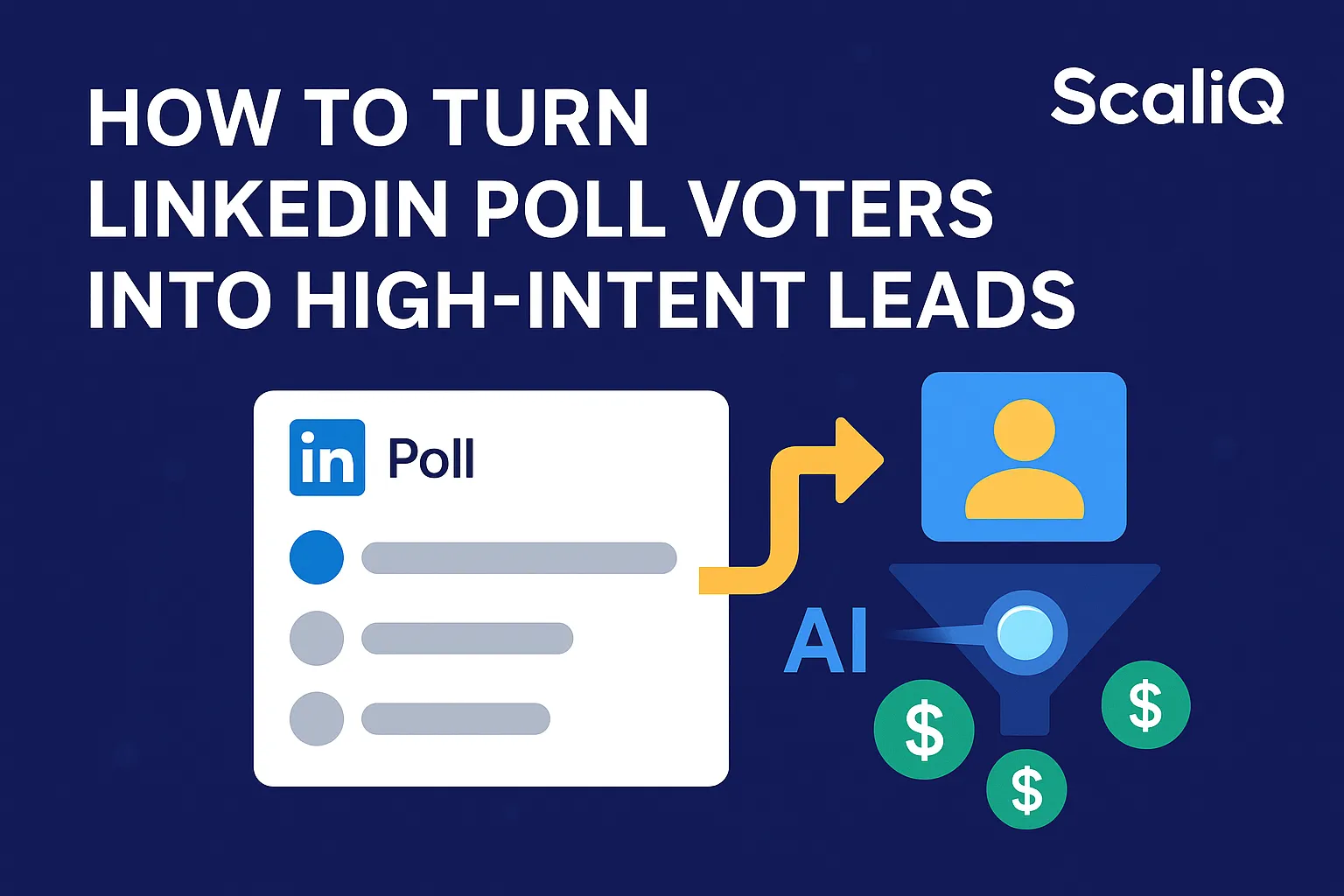
How to Turn LinkedIn Poll Voters Into High-Intent Leads Using AI
Most LinkedIn polls generate impressions, votes, and maybe a handful of comments—but very few teams successfully turn that engagement into real pipeline. For many, a poll is just a vanity metric. But when designed around real pain points, priorities, or buying triggers, a vote is not just engagement; it is a lightweight buying signal.
This guide will show you how to move from chasing impressions to building a repeatable poll-to-pipeline workflow using intent-based segmentation and AI-personalized follow-up. Designed for B2B marketers, growth teams, and sales operators who already use LinkedIn, this framework provides a better system for converting engagement into qualified conversations.
Understanding why intent signals matter early in the buying journey is critical. According to recent Gartner research on rep-free B2B buying, buyers increasingly prefer self-guided education. By the time they speak to sales, they are already evaluating solutions. LinkedIn poll leads allow you to identify these buyers while they are still researching. In this article, we will cover poll design, voter segmentation, poll engagement outreach, mistakes to avoid, and how to operationalize this workflow for consistent LinkedIn lead generation. As a practical positioning note, ScaliQ specializes in workflows that convert these exact poll engagement signals into outbound conversations safely and effectively.
Why LinkedIn Polls Reveal Buyer Intent
LinkedIn polls can be much more than simple engagement tools when they are directly tied to real buyer pain points and decision triggers. There is a vast difference between passive content engagement (like scrolling past a post) and behavior-based signals that reveal what a prospect cares about right now.
Answer choices can indicate a prospect's urgency, organizational maturity, budget readiness, or problem awareness. However, not every voter is an automatic lead. True intent comes from combining the context of their response with their persona fit and relevance to your offer. Poll responses are significantly warmer than generic cold lists because the prospect has voluntarily engaged with a specific, highly relevant business topic. According to McKinsey B2B Pulse research, relevant, personalized, omnichannel buyer engagement is essential for modern growth. Using LinkedIn-native social selling on LinkedIn requires grounding your warm outreach in recent engagement context. A platform like ScaliQ acts as a workflow layer that helps operationalize these LinkedIn engagement signals into outbound conversations compliantly.
What Makes a Poll Vote More Valuable Than a Generic Impression?
A vote carries more signal than a view or a "like" because it forces a micro-choice. When a user selects an option, they are self-identifying their current state. A well-structured answer choice can expose their pain level, priority, or implementation stage. Contrast a vague "thought leadership" poll ("Do you like remote work?") with an intent-rich poll tied to a business problem ("What is your biggest roadblock to scaling outbound?"). The former generates noise; the latter generates highly qualified LinkedIn poll voters.
The 3 Layers of Intent Hidden Inside Poll Engagement
To maximize AI lead qualification, teams must break down intent into three distinct layers:
1. Topic Intent: The overarching subject of the poll (e.g., "CRM migration challenges").
2. Response Intent: The specific answer the user selected, indicating their current maturity or bottleneck.
3. Profile-Fit Intent: The voter's professional identity (role, seniority, company size).
By evaluating both what the person selected and who they are, teams can combine poll responses with likely pain points to build a robust segmentation framework.
When Poll Voters Are Better Than Cold Lists
A poll-driven LinkedIn prospecting motion outshines untargeted outbound when you need a narrower niche, a clearer pain point, and faster relevance. Contextual poll response follow-up converts at a higher rate than standard list-based automation because you are referencing a problem the prospect just admitted to having. While most advice on LinkedIn lead generation stops at maximizing engagement, the real value lies in the conversion mechanics—turning a specific vote into a targeted conversation.
How to Design Polls That Attract Qualified Voters
Poll design determines lead quality downstream. If you write generic questions, you will attract broad, low-signal engagement. To generate qualified LinkedIn poll leads, you must write questions around pain points, blockers, priorities, or buying triggers.
Answer choices should map logically to your funnel stage or the prospect's likely next-step relevance. It is crucial to strike a balance between making the poll broad enough to encourage participation, yet specific enough to capture actionable intent. This framework sharply contrasts with creator-style poll tactics that focus solely on maximizing reach. For deeper campaign ideas and content strategy examples, the ScaliQ blog is an excellent educational resource.
Start With the Buyer Problem, Not the Content Idea
The best LinkedIn poll strategy for lead generation reflects a decision the target buyer is already trying to make. Build your poll from a real customer pain point. Use recurring sales objections, onboarding friction, or operational bottlenecks as your inputs.
• The Framework: Identify Pain Point → Draft Poll Question → Create Strategic Answer Options → Define Follow-Up Path.
Write Answer Choices That Map to Funnel Stage
Each answer option should correspond to a different level of urgency, sophistication, or readiness. One answer might indicate active pain (a high-intent signal), while another signals mere curiosity. For example, an answer like "Currently evaluating tools" demands a different poll engagement outreach angle than "Just learning about the topic." Keep your answer options distinct enough to drive clear AI lead qualification and segmentation later.
Poll Formats That Attract Decision-Makers Instead of Passive Engagement
To attract best-fit LinkedIn poll voters, use trade-off questions, prioritization questions, or operational challenge questions. Avoid broad trend or opinion polls that attract everyone but qualify no one. Align your wording to the exact language decision-makers use internally. Note that niche specificity often lowers total vote volume, but drastically increases downstream sales relevance and LinkedIn prospecting success.
Example Poll Angles for B2B Teams
Here are practical LinkedIn poll examples for B2B teams targeting high-intent leads:
1. The Bottleneck Poll: "What is the biggest friction point in your Q3 reporting?" (Answers reveal specific operational pain).
2. The Priority Poll: "Which GTM motion are you investing most heavily in next year?" (Answers reveal budget timing and strategic priority).
3. The Maturity Poll: "How much of your lead enrichment is currently automated?" (Answers reveal implementation challenges).
Each answer option naturally sets up a distinct follow-up message tailored to the voter's specific reality.
Segmenting Poll Voters by Intent and Fit
A vote alone is not a lead. To separate vanity engagement from actual prospecting opportunity, you must use a clear prioritization model. Segmentation combines the response signal with Ideal Customer Profile (ICP) fit and likely urgency. By classifying voters into tiers, you ensure your outreach effort goes to the highest-probability opportunities first.
According to the LinkedIn B2B Institute Hidden Buyer Gap research, role, stakeholder context, and buying-group complexity heavily influence how engagement should be interpreted. Leveraging AI enrichment and verification helps close these gaps, allowing you to prioritize high-intent leads efficiently.
A Simple Scoring Model: Response Signal + Persona Fit + Urgency
Instead of overcomplicating with rigid numeric scoring, use a lightweight framework across three dimensions:
• Response Selected: Did they choose an answer indicating active pain?
• Role/Company Fit: Does their profile match your ICP?
• Urgency: Does the combination of their role and response suggest an immediate trigger?
Assign rough categories (High, Medium, Low priority). A high-intent voter is a VP of Sales who voted that their "outbound reply rates are dropping." A curiosity click is a junior associate who voted "just here to see results."
How to Separate Curiosity Clicks From Real Buying Signals
Warning signs of low-intent engagement include misaligned roles, broad answer choices, no target market fit, and weak business relevance. High-intent signals come from an aligned persona, a relevant answer, and contextual company fit. Always inspect publicly available profile details compliantly before initiating poll engagement outreach. Think in probabilities, not absolute certainty, when engaging in LinkedIn prospecting.
Build Outreach Tiers From the Poll Data
A practical 3-tier model streamlines your LinkedIn outreach automation:
• Tier 1 (Direct DM/Connection): Ideal fit + strong response signal. (Action: Highly personalized, immediate outreach).
• Tier 2 (Softer Nurture): Good fit + moderate signal. (Action: Connect and share a relevant resource).
• Tier 3 (No Action): Poor fit or "just curious" response. (Action: Do not message).
This tiered poll response follow-up reduces wasted effort and protects your brand trust.
Enrichment Data That Improves Prioritization
To improve your AI lead qualification, layer in compliant public enrichment data: job title, company size, industry, likely use case, or maturity clues from their profile. Enrichment helps you write smarter, more contextual outreach and avoid false positives. Keep the data collection focused strictly on relevance to avoid gathering unnecessary information. This context sets the stage for effective AI-assisted personalization.
AI-Powered Follow-Up That Starts Conversations
Once your LinkedIn poll voters are segmented, the next advantage comes from speed and personalization. AI can assist with profile enrichment, message drafting, intent inference, and prioritization—transforming a static list into a dynamic campaign. The goal is to ensure the message feels contextual and consultative, not automated.
According to the NIST AI Risk Management Framework, responsible AI usage requires human review and trustworthy personalization to mitigate risk. Incorporating tools like RepliQ adds a powerful personalization layer by tailoring outreach based on poll responses and profile context, while ScaliQ orchestrates the entire workflow connecting poll data, segmentation, and outbound execution.
The Ideal Timing Window for Poll-Voter Outreach
Follow-up works best while the poll interaction is still fresh. The approach should be "prompt but not pushy." Reaching out within 24 to 48 hours is generally optimal, as engagement context decays quickly. Timely poll response follow-up ensures the prospect remembers their vote, making social selling on LinkedIn feel natural rather than disruptive.
A Permission-Based Outreach Framework
Never jump straight into a pitch. Open with context from the vote. A successful permission-based framework looks like this:
• Mention their poll response.
• Reflect the likely pain point associated with that choice.
• Offer a relevant idea, framework, or resource.
• Ask a low-friction, conversational question.
Keep the ask small and respect the buyer's time. This approach respects the high-intent leads you are trying to cultivate.
Message Branching by Poll Answer
Your AI LinkedIn outreach personalization should branch based on the selected answer.
• Branch A (Voted: "Data Quality Issues"): "Noticed you voted that data quality is your biggest CRM blocker right now. Are you currently doing manual cleanups, or looking at automated enrichment?"
• Branch B (Voted: "Low Reply Rates"): "Saw your vote on the outbound poll. Since you highlighted low reply rates, I thought you might find this messaging framework helpful."
Message personalization should reference the voter’s choice naturally, whether in a connection request or a post-connection DM.
What AI Should Do vs. What Humans Should Still Review
AI is exceptional at summarizing public profiles, drafting first-pass copy, identifying likely pain points, and ranking opportunities. However, humans must still review message tone, factual claims, ICP fit, and compliance before sending. AI should support relevance, not amplify spam. Create reusable AI prompts for persona, poll answer, and offer context, but always align with the NIST guidelines for risk-aware AI deployment to maintain trust in your AI lead qualification.
Sample Workflow: From Vote to Qualified Conversation
To turn engagement into pipeline, implement this scalable, compliant workflow:
1. Capture poll voters (via public, compliant methods).
2. Review the specific answer choice.
3. Enrich the profile with public firmographic data.
4. Score by fit and intent (Tiers 1-3).
5. Generate a draft message using AI based on the answer branch.
6. Conduct a human review for tone and accuracy.
7. Send the follow-up message.
8. Track the reply and log the CRM outcome.
This process is infinitely more scalable than manual follow-up, yet far more contextual than generic LinkedIn outreach automation.
Common Poll Outreach Mistakes to Avoid
Poor poll outreach fails because of weak poll design, weak segmentation, or over-automated messaging. This section addresses exactly what should you avoid when messaging poll voters on LinkedIn. Trust is paramount. The FTC guidance on AI-related consumer harm strictly warns against deceptive, misleading, or overly automated AI-generated messaging. Your poll engagement outreach must be transparent, respectful, and highly relevant.
Mistake #1: Writing Polls for Reach Instead of Relevance
Broad polls inflate vanity metrics but severely reduce downstream conversion value. If you ask a generic question, your answer choices make segmentation nearly impossible. Always tie your LinkedIn poll strategy for lead generation back to a specific buyer problem to ensure the voters you attract actually fit your ICP.
Mistake #2: Messaging Every Voter the Same Way
Uniform follow-up destroys trust and ignores the very context the poll provided. If you message every voter identically, your AI LinkedIn outreach personalization will sound robotic and hollow. You must branch your messaging by answer choice and persona fit to acknowledge the specific micro-choice the prospect made.
Mistake #3: Pitching Too Early
Immediate hard-selling breaks the social selling dynamic. If your first message after a poll vote is a calendar link, you will alienate high-intent leads. The poll context should open a consultative conversation, not force a premature close. Offer insight-led follow-up before ever asking for a meeting.
Mistake #4: Ignoring Compliance, Trust, and Human Review
Teams must avoid misleading personalization, false familiarity, or making claims unsupported by the prospect’s context. Never use scraping tools that violate LinkedIn's Terms of Service; rely only on compliant, publicly accessible data workflows. Implement human QA before sending AI-generated messages. Grounding your trustworthy AI outreach in both FTC and NIST guidelines ensures transparency and respectful boundaries.
Mistake #5: Failing to Track What Actually Turns Into Pipeline
Do not stop at vote counts, impressions, or superficial replies. What matters is generating qualified conversations, booking meetings, progressing CRM stages, and influencing revenue. If you fail to track these metrics, you cannot turn engagement into pipeline, rendering your LinkedIn lead generation efforts purely theoretical.
Tools, Workflow Tips, and Measurement
To operationalize the process and measure whether poll engagement is becoming a revenue opportunity, you need a practical poll-to-outreach stack. Keep the workflow lightweight initially, documenting your outreach branches and scoring criteria so the process becomes repeatable. For teams looking to scale these systems, the ScaliQ blog offers extensive resources on automation and outbound strategy.
Minimum Viable Poll-to-Pipeline Stack
A practical stack requires a way to capture voter signals compliantly, qualify prospects, personalize outreach, and log outcomes into your CRM. You do not need overly complex tooling; you simply need a reliable mechanism for AI lead qualification and safe LinkedIn outreach automation that bridges the gap between social engagement and sales execution.
What Metrics to Track
Move beyond impressions. Track these core metrics:
• Voter-to-qualified-prospect rate
• Outreach reply rate
• Conversation rate
• Meeting booked rate
• Pipeline influence
Tying each poll campaign back to a specific business objective ensures you are capturing high-intent leads, not just harvesting likes.
How to Improve the Workflow Over Time
Continuously review which poll formats produce the best-fit voters. Refine your answer-choice logic based on the quality of the resulting conversations. Keep a tight feedback loop between your content, sales, and operations teams. The best workflows iteratively improve both upstream LinkedIn poll strategy for lead generation and downstream AI LinkedIn outreach personalization.
Future Trends in Signal-Based LinkedIn Prospecting
B2B growth teams are rapidly shifting from static lead lists to real-time engagement signals. Micro-engagements like polls, comments, and specific reactions are becoming the most reliable prospecting triggers available. As noted by analysts at Gartner and McKinsey, buying behavior is increasingly self-educated and digitally influenced. AI agents and secure workflow automation are making signal-based prospecting operationally feasible at scale. However, as automation increases, relevance and trust will matter more—not less. Teams that master how to turn engagement into pipeline compliantly will dominate the next era of AI LinkedIn outreach personalization.
Conclusion
LinkedIn polls become highly valuable when they are designed around buyer intent, segmented by fit and urgency, and followed up with relevant, AI-assisted outreach. The practical workflow is clear: create better polls, interpret responses as intent signals, prioritize the right voters, personalize your follow-up, and measure the pipeline outcomes. The goal is not to message every voter, but to identify the most relevant opportunities and start warmer conversations. ScaliQ is directly focused on workflows that convert these exact poll engagements into compliant outbound conversations, making this a practical system rather than abstract theory. To operationalize your poll engagement outreach and turn engagement into pipeline, explore how ScaliQ can streamline your process today.