

Introduction
You check your notifications and see a list of people who recently viewed your profile. Yet, your inbox remains empty. This is a common frustration for founders, sales reps, recruiters, and GTM operators: people are clearly looking at what you do, but few actually take the initiative to message you first.
Profile views are highly overlooked warm intent signals. When followed up correctly, these silent visits can easily turn into real, high-value conversations. The key is knowing how to bridge the gap between a passive view and an active dialogue without sounding like a spammy sales pitch.
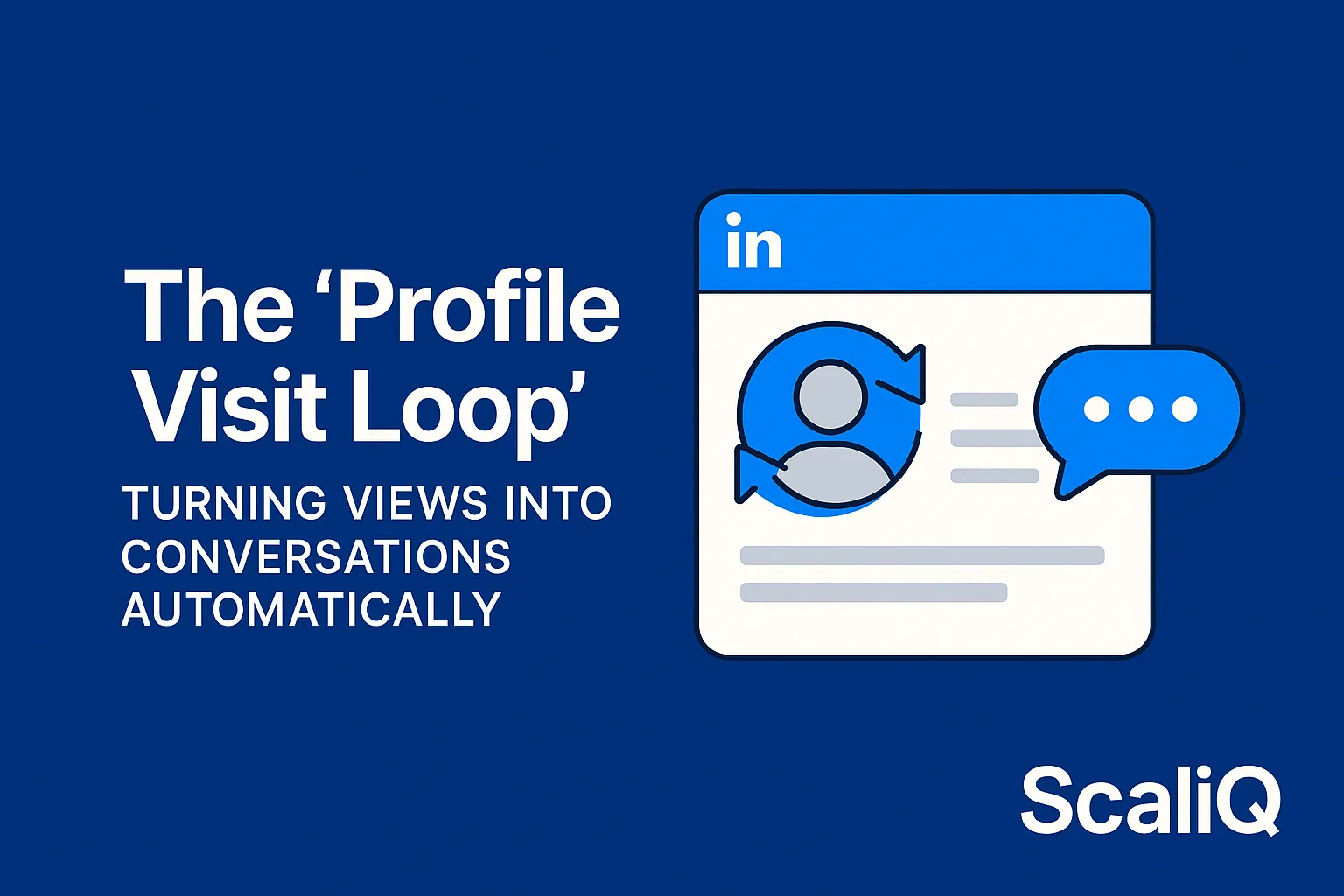
Enter the "Profile Visit Loop"—a simple, repeatable visitor conversion strategy designed specifically for beginners. Instead of guessing who might be interested in your offer, this framework allows you to leverage existing visibility. In this guide, we will cover exactly why profile visits matter, how to execute a seamless linkedin profile visits outreach sequence, how to personalize your messages, and the critical steps to avoid falling into the spam folder.
At ScaliQ, we have seen firsthand how effectively teams can turn LinkedIn profile views into conversations by utilizing AI triggers and signal-based outreach. By focusing on intent rather than volume, you can build a lightweight workflow that consistently generates pipeline. Once you master the fundamentals here, you can explore more beginner-friendly LinkedIn outreach education to further refine your strategy.
Why Profile Views Are Warm Intent Signals
A profile visit is far more than a vanity metric. In the context of a strong LinkedIn profile views strategy, a visit often signals curiosity, evaluation, or early buying intent.
Professionals rarely browse profiles entirely at random. They visit because they are researching solutions, comparing vendors, checking your credibility after seeing a comment you made, or waiting for the right moment to take the next step. For beginners, prioritizing warm outreach based on these visits removes the guesswork associated with broad, untargeted cold prospecting. It frames profile viewers as a prime social selling on LinkedIn opportunity rather than an excuse for aggressive, high-volume automation.
To effectively monitor these signals, you should familiarize yourself with LinkedIn’s Who’s Viewed Your Profile feature, which provides the foundational data needed to start your outreach loop.
What a LinkedIn Profile View Usually Means
The intent behind a profile visit generally falls into a few distinct categories: brand awareness, active interest, vendor vetting, recruiting, partnership research, or competitor monitoring.
It is vital to distinguish between casual curiosity and strong buyer intent. If a founder visits your page right after you publish a post about lead generation, they are likely evaluating your expertise. However, this visit should be treated as a natural conversation opener, not definitive proof of purchase intent. By engaging them thoughtfully, you capitalize on profile visitor engagement without overstepping. Ultimately, reading LinkedIn profile views correctly allows you to align your message with their current stage of awareness.
Why Warm Signals Often Beat Cold Lists
Signal-based outreach consistently outperforms list-based cold outreach because of two critical factors: timing and relevance.
Reaching out to someone who just viewed your profile feels natural and contextual. Conversely, messaging strangers from a static list with no visible trigger often feels disruptive. When you base your LinkedIn lead generation efforts on actual behavior, response quality naturally improves. Your message references a real, shared event—the profile visit—rather than relying on a generic pitch. This targeted, LinkedIn trigger-based outreach stands in stark contrast to volume-first automation approaches that prioritize quantity over human connection.
When You Should Not Assume a Viewer Is a Lead
Not every visitor belongs in your sales pipeline. Some viewers are recruiters, direct competitors, industry peers, or simply accidental visitors.
Before sending a message, always look at the visitor's role, company, and recent activity. Proper intent classification is a mandatory step in any visitor conversion strategy. Over-personalizing a message based on weak or ambiguous profile visit triggers can damage your reputation and make your outreach feel invasive. Learning how to avoid spammy LinkedIn outreach starts with knowing when not to send a message.
The Profile Visit Loop Framework
The Profile Visit Loop is a straightforward, step-by-step workflow: detect the visit, identify likely intent, send a personalized message, and continue the conversation with value.
This framework is highly actionable and tailored for beginners who need a reliable daily operating rhythm. By following these steps, you can operationalize trigger-based outreach without overcomplicating the process. ScaliQ’s practical experience shows that relying on a signal-based workflow drastically reduces manual follow-up gaps, ensuring no warm opportunity slips through the cracks.
Step 1 — Detect the Profile Visit
The first step in the linkedin profile visits outreach loop is identifying when someone has viewed your profile. Timing is everything; interest is highest when the visit is fresh.
You don't need complex technical setups to start. Using available platform signals, you simply monitor your notifications. If you are wondering how do LinkedIn profile visit triggers work for outreach, it comes down to checking your visitor list daily and noting who aligns with your target audience. The goal is timely follow-up based on visible engagement, not surveillance. This forms the bedrock of a healthy LinkedIn profile views strategy.
Step 2 — Identify Likely Intent
Once a visit is detected, sort the viewer into a simple category: buyer, recruiter, partner, peer, or competitor.
Look for obvious profile clues. What is their job title? What industry are they in? Do you share mutual connections? Have they engaged with your recent posts? Classifying intent before you write a single word drastically improves message relevance. A simple intent checklist ensures you tailor your warm LinkedIn outreach examples correctly, directly boosting profile visitor engagement and teaching you how to personalize outreach based on role or company.
Step 3 — Send a Contextual First Message
Your first message must acknowledge the context of their visit without sounding invasive.
Short, low-pressure openers that focus on relevance rather than pitching perform best. There is a massive difference between a generic "Thanks for viewing my profile, want to buy my service?" and a contextual "Noticed you stopped by my profile—how are things over at [Company]?" Speed and restraint are your best friends here. When you want to turn LinkedIn profile views into conversations, timely warm outreach that feels entirely natural will always win. Learning how to message LinkedIn profile viewers effectively is about starting a dialogue, not closing a deal in the first breath.
Step 4 — Continue the Conversation With Value
The goal of the first message is simply to get a reply. The goal of the second message is to open a useful conversation.
Once they respond, share a relevant insight, ask one thoughtful question about their workflow, or reference a shared industry problem. Do not turn the second message into a hard sell. Social selling on LinkedIn requires patience. By consistently adding value, you naturally guide the relationship toward meaningful LinkedIn lead generation and pipeline creation, ultimately protecting your overall LinkedIn response rates.
Step 5 — Review What Converts and Repeat
The profile visit loop is only effective if it becomes a repeatable daily or weekly habit.
Track your results simply: note the visitor type, the message sent, the reply status, and the conversation quality. Beginners do not need a complex CRM to start learning what works. Because manual LinkedIn follow-up is inconsistent over time without a system, committing to this lightweight, strategy-led loop ensures steady reply optimization without the headache of managing overly complex campaigns.
How to Personalize Follow-Up Messages
Personalization is the difference between a message that gets ignored and one that starts a relationship. To successfully turn LinkedIn profile views into conversations, your messages must feel human, timely, and relevant.
Generic templates fail because they lack context. True personalization stems from signals like role, company, and probable intent. As highlighted in this research-backed guide to personalized messaging, specific and relevant outreach vastly improves response quality. Below are practical templates to help you structure what should you send after someone views your LinkedIn profile.
Personalization Principles That Do Not Feel Creepy
The best personalization feels helpful, not like you are monitoring their every move.
Use only obvious professional context. Do not reference overly specific personal observations from deep in their feed. Keep the message focused on shared context: their role, their company's current stage, a piece of content they engaged with, or a known industry problem. When focusing on profile visitor engagement, remember that professional relevance always beats excessive, invasive detail. This is step one in learning how to avoid spammy LinkedIn outreach.
Template for a Potential Buyer
When a visitor looks like a possible customer or evaluator, your goal is to open a low-friction conversation based on curiosity.
Good Example:
Bad Example:
The good example uses warm outreach to invite a response. The bad example is a generic pitch that harms LinkedIn lead generation efforts.
Template for a Recruiter or Hiring Manager
If the intent classification points to recruiting, shift your tone away from selling and toward mutual relevance and background fit.
Good Example:
Not every viewer should enter a sales sequence. Adapting your visitor conversion strategy to the context of the visit ensures your LinkedIn profile views translate into valuable network growth.
Template for a Partner, Peer, or Founder
For peers or potential partners, write a collaborative opener focused on shared audiences, industry overlap, or mutual value.
Good Example:
This template keeps the message conversational and relationship-first, which is the cornerstone of effective social selling on LinkedIn. Utilizing these warm LinkedIn outreach examples keeps your profile visit loop running smoothly.
Bad Message vs Good Message Examples
Generic LinkedIn messages reduce reply rates because they show zero effort.
Common mistakes include writing long, multi-paragraph intros, dropping instant calendar links before a conversation has started, making irrelevant offers, or using obvious automation language ("I see we are both in the human species"). A good opening line earns the right to continue the conversation. A bad one gets you ignored or blocked. Guarding your LinkedIn response rates means prioritizing relevance over word count.
Manual vs AI-Triggered Outreach
As your visibility grows, following up with every visitor manually can become a bottleneck. Balancing hands-on follow-up with AI-assisted workflows allows you to scale your outreach without sacrificing relevance.
Manual outreach is perfect for low volume and high care. AI-triggered workflows, however, excel at consistency, speed, and data enrichment. Following the NIST guidance for responsible generative AI use, you can use technology to assist with triggers, personalization, and workflow consistency while maintaining a deeply human touch. This signal-based outreach strategy completely bypasses the pitfalls of typical automation tools that prioritize sheer scale over relationship building.
When Manual Follow-Up Is Enough
If your profile gets a handful of views a week, manual outreach is the best place to start.
Founders, consultants, and recruiters handling a limited number of high-value conversations should rely on manual execution initially. Because manual LinkedIn follow-up is inconsistent at scale, it is best used as a training ground. Beginners must first learn the message logic, intent classification, and warm outreach timing before introducing automation. These are essential LinkedIn lead generation tips for beginners.
Where AI Triggers Add Real Value
When volume increases, AI triggers step in to handle the heavy lifting.
AI adds real value through faster response times, consistent follow-up, context gathering, and first-draft message generation. If you are wondering how do LinkedIn profile visit triggers work for outreach at scale, AI can automatically classify visitor intent and tailor the opener based on role or company data. Crucially, AI should be used to support relevance, not to send generic high-volume blasts.
A Simple Beginner Workflow
You do not need to be a technical expert to build a visitor conversion workflow. A simple, daily operating loop looks like this:
1. Visit Detected: The system logs a new profile view.
2. Viewer Categorized: AI or manual review determines their intent (Buyer, Peer, etc.).
3. Draft Generated: A contextual first message is drafted based on templates.
4. Human Review: You quickly approve or tweak the message.
5. Message Sent: The message is delivered while the intent is fresh.
This strategy-led profile visit loop relies on process clarity rather than campaign complexity, making LinkedIn outreach automation accessible and safe.
Guardrails for Safe AI-Assisted Outreach
Safety and compliance are non-negotiable. Always adhere to the LinkedIn User Agreement on automation and messaging.
Ensure you have human-in-the-loop review layers, strict daily message caps, and relevance checks. Never engage in prohibited scraping behavior. AI should assist your workflow using legally accessible, public data. Setting these guardrails teaches you how to avoid spammy LinkedIn outreach while executing safe outreach that protects your account and your brand reputation.
Best Practices to Avoid Spam and Low Replies
The fear of coming across as spammy is the number one reason professionals hesitate to try profile-visit outreach.
By focusing on timing, relevance, restraint, and message quality, you can build trust instantly. A successful visitor conversion strategy is as much about knowing what not to do as it is about sending the right message. Adhering to LinkedIn guidance on spam and inappropriate outreach ensures your LinkedIn response rates remain high.
Best Timing After a Profile Visit
When should you message someone after a profile visit? Timely follow-up matters, but instant outreach (messaging them 10 seconds after they view your page) can feel unnatural and automated.
Treat timing as a practical window—usually between a few hours to 24 hours after the visit. Test different windows based on your audience type. Proper timing turns profile visit triggers into natural serendipity rather than aggressive warm outreach.
Keep the First Message Short and Relevant
Concise openers earn engagement; long paragraphs force a pitch.
Stick to the rule of one: one message, one idea, one reason for reaching out. If you are unsure what should you send after someone views your LinkedIn profile, default to a single, context-driven question. Long intros and multiple asks are exactly why generic LinkedIn messages reduce reply rates.
Use Frequency Caps and Respect Non-Response
If a prospect does not reply to your contextual opener, do not bombard them with follow-ups.
Repeated nudges on a weak signal destroy trust. No reply is often a sign to stop, not escalate. Keep your follow-ups limited—perhaps one gentle bump a week later—and space them appropriately. Respecting non-response is a core tenet of how to avoid spammy LinkedIn outreach and maintain healthy profile visitor engagement.
Signals That Mean You Should Not Follow Up
Sometimes, people view my LinkedIn profile but do not message—and that is perfectly fine. You should not follow up if the visitor is:
• Anonymous (LinkedIn Member)
• In an entirely irrelevant role or geography
• From a poor-fit account that you cannot serve
• Lacking any contextual reason to connect
Better filtering leads to better reply quality. Skipping bad fits is a vital part of safe outreach and a mature visitor conversion strategy.
What Good Outreach Feels Like
Effective outreach is timely, human, specific, useful, and low-pressure.
It feels like a natural networking event conversation. Spammy outreach, on the other hand, is generic, pushy, and obviously automated. When you execute the profile visit loop correctly, you prove that signal-based outreach is the most respectful and effective form of social selling on LinkedIn.
Tools, Resources, and Next Steps
Tools should enable your strategy, not replace it. Now that you understand the mechanics of the Profile Visit Loop, your next step is implementation. Start by defining your visitor categories, creating your message templates, and building a simple review process for your LinkedIn trigger-based outreach.
Your Starter Checklist for the Profile Visit Loop
Use this skimmable checklist to launch your LinkedIn lead generation routine:
• [ ] Identify profile viewers: Check your notifications daily.
• [ ] Categorize intent: Are they a buyer, peer, or recruiter?
• [ ] Pick the right template: Match the framework to their role.
• [ ] Personalize one line: Add a specific detail about their company or content.
• [ ] Send and track replies: Monitor what works and refine.
This checklist is the foundation of your visitor conversion strategy. These LinkedIn lead generation tips for beginners will keep your daily workflow focused.
When to Upgrade From Manual to Trigger-Based Workflows
You will know it is time to upgrade when your profile volume grows, your personalization takes too long, or you notice that manual LinkedIn follow-up is inconsistent.
Do not automate a broken process. Automation should only follow process clarity. Once your templates are proven to convert, introducing LinkedIn outreach automation will scale your signal-based outreach efficiently.
Where to Learn More
To deepen your tactical knowledge, explore these resources:
• Read more signal-based outreach and LinkedIn workflow content to master advanced triggers.
• Check out this useful related resource for personalization and outreach education to refine your copywriting and warm LinkedIn outreach examples.
• Continue practicing social selling on LinkedIn by engaging daily with your feed.
Conclusion
Profile views are one of the simplest, most accessible warm signals on LinkedIn, but they only create pipeline value when followed by relevant, timely action.
The "Profile Visit Loop" provides a beginner-friendly system to capitalize on this visibility: detect the view, identify the intent, personalize the opener, and continue the conversation with value. By shifting your mindset from broad cold messaging to targeted, signal-based outreach, your efforts become far more effective and significantly more human.
Stop letting warm intent slip away. Build your first loop today, track your conversations, and explore how ScaliQ supports trigger-based, personalized outreach to help you operationalize this strategy consistently and compliantly.