

Introduction: Why Pricing Changes Are Valuable Sales Triggers
Modern sales teams face a persistent prospecting problem: static firmographics and broad intent categories rarely explain why an account should be contacted right now. Knowing a company’s employee count, industry, or general software stack helps define your total addressable market, but it fails to isolate timely opportunities.
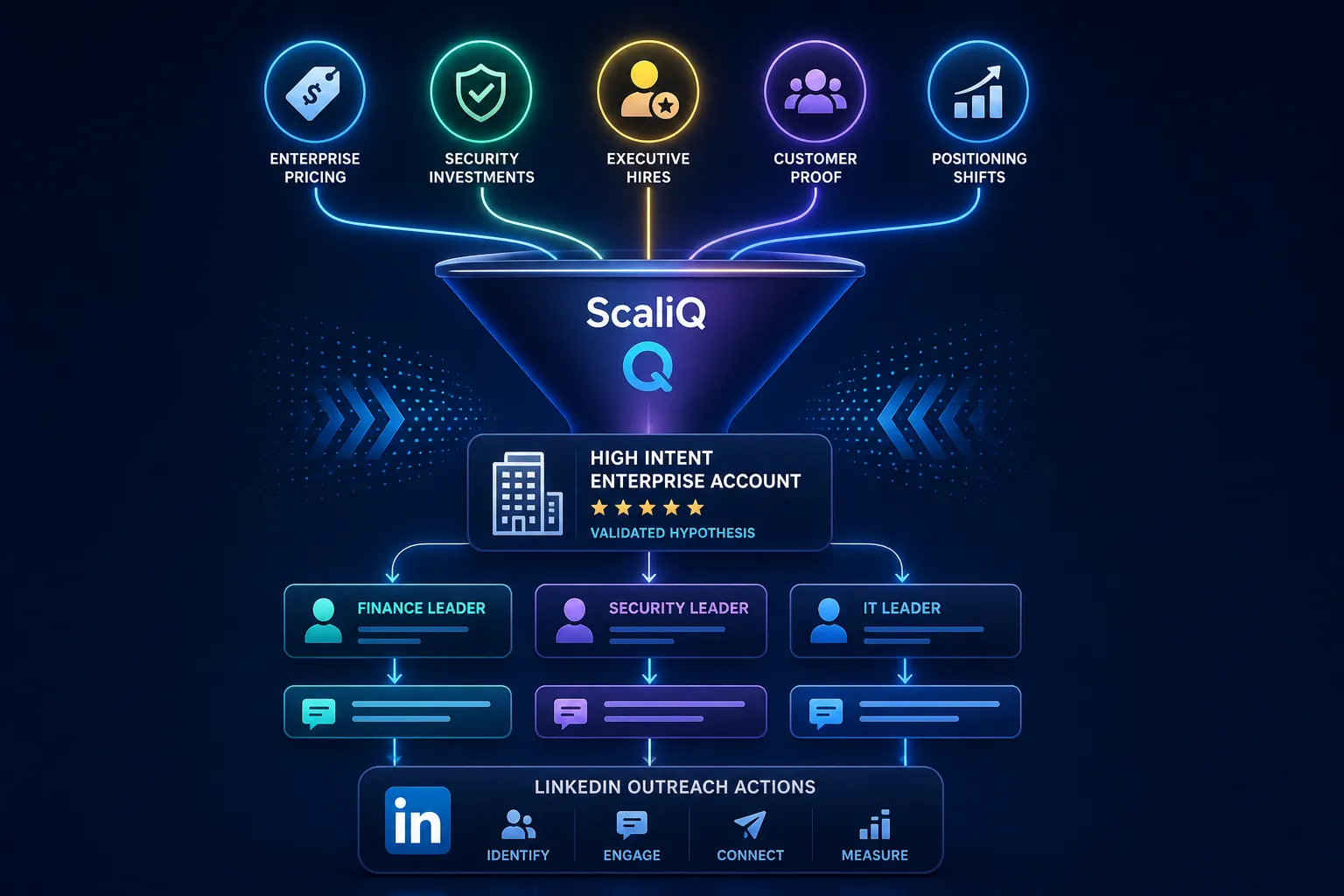
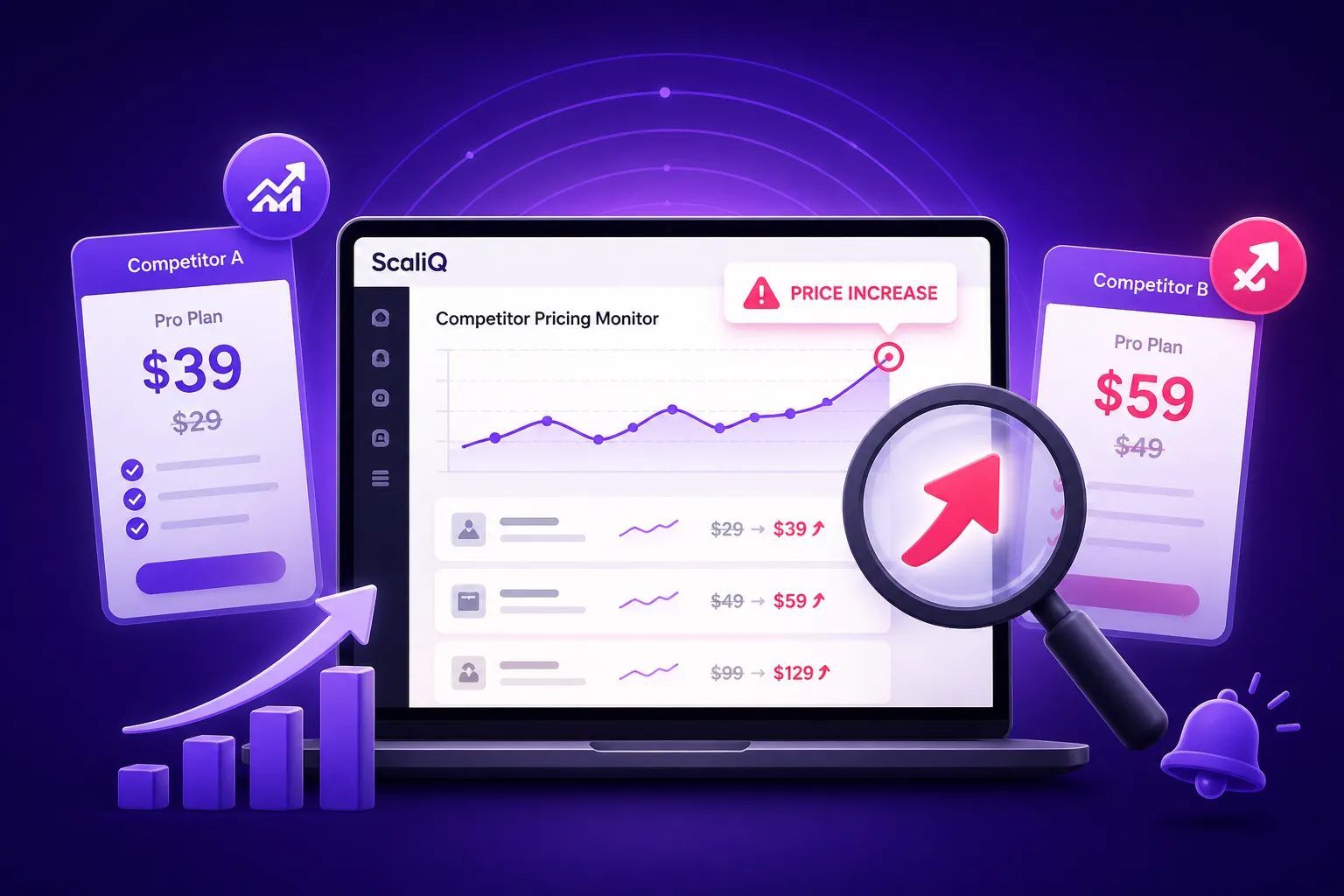
Enter the public pricing change. A pricing change sales trigger is a concrete, behavioral event that often coincides with strategic shifts, such as brand repositioning, new margin priorities, packaging experimentation, movement upmarket, or new enterprise ambitions. When a company alters how it charges for its product, it signals an evolution in its commercial strategy.
However, it is crucial to state that a price increase signal is not guaranteed buying intent. Rather, it is a highly explainable, monitorable event that becomes valuable when properly classified, corroborated, scored, and connected to a relevant account hypothesis.
This guide outlines a disciplined workflow for leveraging these B2B prospecting signals:
1. Detect the change.
2. Compare the previous and current pricing state.
3. Classify the change.
4. Validate it with additional public signals.
5. Score the account.
6. Tailor LinkedIn outreach to a plausible business initiative.
To effectively identify and operationalize these meaningful changes in company behavior, teams can rely on ScaliQ as a foundational resource for monitoring and interpreting commercial signals.
What a Public Pricing Change Can Reveal About a Company
To utilize a pricing change sales trigger effectively, revenue teams must look beyond the surface-level edit and understand the strategic hypotheses that a pricing update can support.
Pricing Increases Versus Packaging Changes
When monitoring commercial pages, it is vital to distinguish between a direct price increase and a structural packaging change. A direct price hike simply raises the cost of an existing tier. Conversely, packaging changes might involve introducing a new plan, removing a legacy plan, altering seat limits, adjusting usage allowances, modifying a free-trial structure, shifting emphasis from monthly to annual commitments, or launching a dedicated enterprise tier.
Pricing page monitoring must capture these nuances. A page change should be recorded as a specific, categorized event rather than reduced to a generic "prices went up" alert. Packaging adjustments often fundamentally change customer qualification criteria, even if the headline price remains similar. For example, moving a key feature from a mid-tier plan to an enterprise plan forces a specific segment of users to upgrade, signaling a shift in monetization strategy. To accurately interpret these shifts, always utilize a before-and-after comparison of the pricing structure.
Signals of Upmarket Repositioning and Margin Expansion
A pricing change can support several strategic hypotheses regarding a company's trajectory. These include a deliberate move toward larger customers, an increasing emphasis on locking in annual or enterprise contracts, protecting or expanding profit margins, simplifying complex product tiers, or aligning price with a more advanced product position.
However, these hypotheses require supporting evidence. When looking for enterprise upmarket signals or indications of margin expansion, search for corroborating factors:
• The introduction of a dedicated enterprise plan or advanced security packaging (e.g., SSO, SOC2 compliance).
• Revised plan limits that push high-volume users into custom pricing tiers.
• New language explicitly incentivizing annual commitments.
• Recent product or platform expansions that justify higher costs.
• Active hiring related to enterprise sales, customer success, or product marketing.
• Website messaging that increasingly emphasizes larger customers or complex use cases.
Because pricing changes can stem from multiple operational causes, never present a hypothesis as a confirmed strategy unless it is supported by multiple observable, public signals.
Why the Change Is a Research Trigger—not Proof of Intent
It is essential to clarify the distinction between a company changing its commercial behavior, a company showing interest in a specific solution, and a company being ready to buy. A pricing change indicates the first scenario; it is not proof of the third.
A pricing change creates a compelling reason for account research and targeted outreach, but it does not justify an aggressive, presumptive sales pitch. These sales triggers should be used as one input alongside other company change signals for prospecting, such as firmographic fit, timing, product launches, hiring trends, funding rounds, and go-to-market evidence.
This evidence-based approach stands in stark contrast to generic buyer intent data workflows, which often provide a "surge score" but lack the vital context about the underlying business event driving the activity.
How to Find Companies That Recently Raised Their Prices
Detecting commercial changes requires a repeatable documentation workflow that can be executed manually or supported by advanced research systems.
Monitor Pricing and Packaging Pages
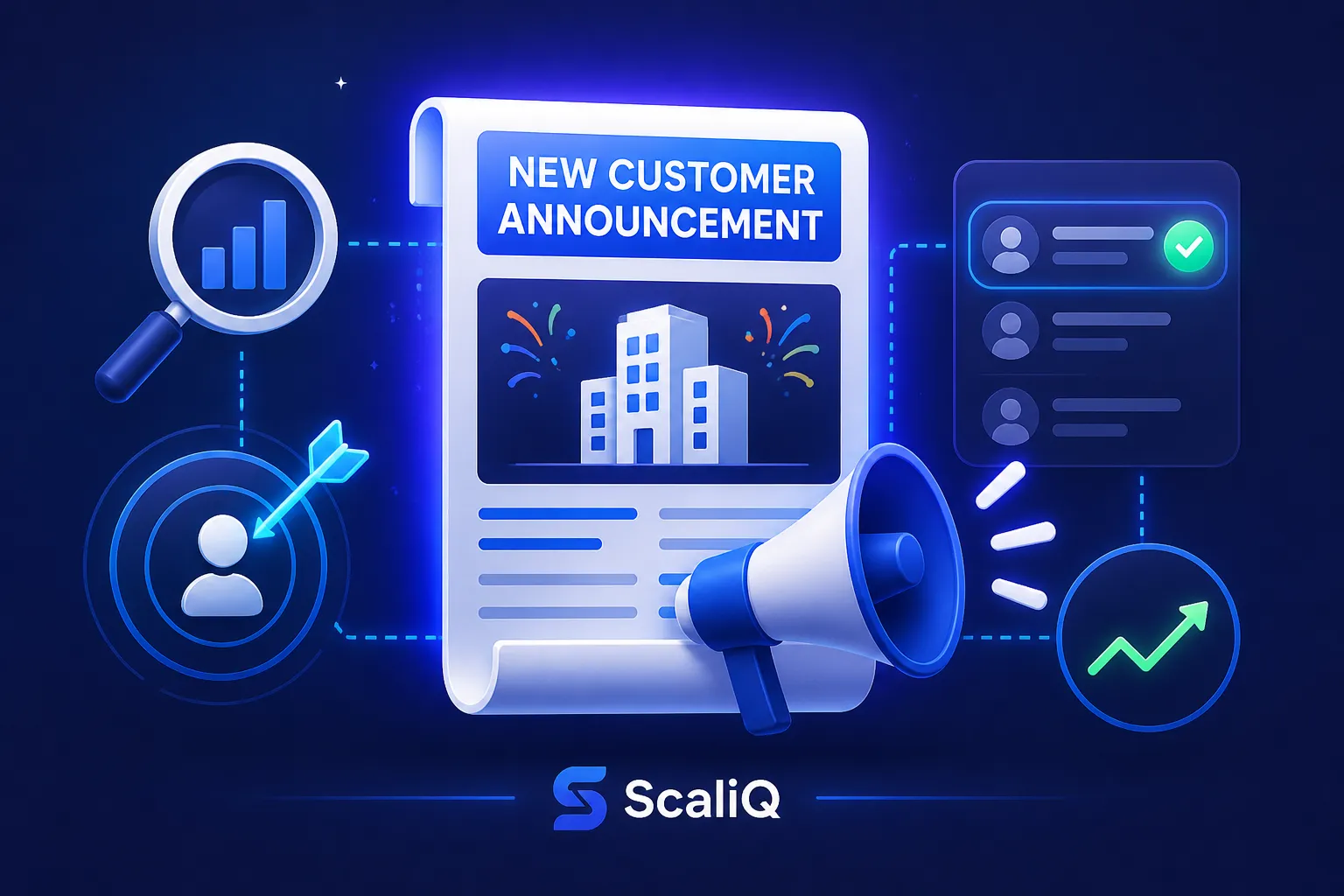
Commercial changes can appear across various public digital assets. Effective competitive pricing intelligence requires monitoring pricing pages, product or packaging pages, plan comparison matrixes, product changelogs, customer announcements, and relevant public company updates (such as press releases or investor relations pages).
Companies often implement SaaS pricing changes without a formal announcement, making proactive pricing page change detection critical. When monitoring, ensure you track the following data points:
• Page URL
• Date observed
• Previous state
• Current state
• Affected plans
• Affected customer segment
• Evidence link or archived record
Teams can rely on manual monitoring, web alerts, sales intelligence platforms, or purpose-built change detection systems. For comprehensive guidance on how to monitor SaaS pricing changes and build a robust research workflow, explore ScaliQ's educational content. Note that all data collection must be public, lawful, and explainable, strictly avoiding restricted areas or deceptive extraction methods.
Capture a Before-and-After Record
A raw page diff (a simple code-level comparison showing what text changed) is insufficient for B2B account intelligence. The commercial meaning of a pricing change monitoring event depends entirely on the affected plan and the specific customer segment it targets.
To make this data actionable, capture a structured before-and-after record:
• Company: (e.g., Acme Corp)
• Pricing page: (URL)
• Previous price or package: (e.g., Pro Plan at $50/mo, unlimited users)
• Current price or package: (e.g., Pro Plan at $50/mo, capped at 5 users)
• Change date or detection date: (e.g., October 12)
• Change type: (e.g., Seat limit introduction)
• Confidence level: (e.g., High - Confirmed via page archive)
• Supporting evidence: (e.g., Wayback Machine link)
• Potential business interpretation: (e.g., Shifting to a seat-based expansion model)
Preserving the original evidence ensures that sales and revenue operations teams can accurately audit the signal during company research and account planning.
Classify the Type and Significance of the Change
Not all SaaS pricing changes carry the same weight. To effectively leverage recently raised prices or pricing model changes, create a clear taxonomy to classify the event:
• Confirmed price increase
• Plan restructuring or consolidation
• Free-plan or free-trial removal
• Seat or usage-limit change
• Enterprise-tier launch
• Annual-contract emphasis
• Usage-based pricing introduction
• Ambiguous or incomplete change
Different changes are relevant to different commercial use cases. Removing a free tier suggests a focus on revenue quality and margin, while launching an enterprise tier indicates upmarket expansion. When classifying, strictly separate what changed, who is affected, what the change might indicate, and what remains unknown.
How to Validate and Score a Pricing Change Signal
An isolated observation only becomes a defensible account-prioritization input when combined with corroborating evidence, recency, fit, and confidence scoring.
Use Corroborating Evidence
To strengthen your account-based prospecting signals, cross-reference the pricing change against additional public signals. Look for hiring activity (e.g., hiring enterprise AEs after launching a custom tier), funding or corporate-event context, new product launches, updated website messaging, the introduction of security or compliance packaging, and sales or customer-success expansion.
This competitive intelligence can support or weaken hypotheses regarding movement upmarket or margin expansion. The core validation principle is simple: two or more independent signals increase your confidence in a hypothesis, but they still do not constitute absolute proof of intent.
Document the hypothesis clearly to maintain transparency:
• Observed: A pricing or packaging change occurred.
• Supported hypothesis: The company may be targeting a more mature enterprise segment.
• Open question: Whether the change reflects a finalized go-to-market strategy, temporary A/B testing, or a minor operational update.
Using clear evidence labels—such as “confirmed,” “probable,” and “ambiguous”—supports accuracy and responsible personalization.
Apply Confidence and Recency Scoring
Not all buyer intent signals warrant immediate action. Implement a practical scoring framework using the following criteria: change clarity, evidence quality, recency, company fit, strategic relevance, and potential commercial impact.
It is vital to separate signal confidence from account priority. A highly confident sales trigger scoring at a poor-fit account (outside your ICP) does not deserve immediate action. Conversely, a probable change at a strong-fit account merits immediate human review.
The useful recency window for a pricing change varies by market and sales cycle. In fast-moving SaaS markets, a change from two weeks ago is highly relevant; in enterprise manufacturing, a change from three months ago may still be actively rippling through the organization. Record whether the signal is Confirmed, Probable, Ambiguous, or Expired.
Route the Signal to the Right Persona
A pricing change impacts different departments depending on its nature. For effective persona-based prospecting, map the implications of the change to the relevant roles before initiating LinkedIn outreach:
• Finance leaders: Relevant for changes impacting margin, pricing architecture, and commercial efficiency.
• Product marketing: Relevant for changes in packaging, segmentation, and market positioning.
• Revenue operations: Relevant for process updates, CRM adjustments, and signal activation.
• Sales leaders: Relevant for go-to-market changes and moving upmarket.
• Product leaders: Relevant for monetization strategy and plan design.
• Customer success leaders: Relevant when changes directly affect existing customer renewals.
The right contact depends entirely on the change type and your specific offer. Always research the account and the individual's role before deploying sales trigger examples in your outreach.
Turning a Pricing Change Into LinkedIn Outreach
The goal is to convert a verified signal into relevant, non-invasive messaging that opens a business conversation, rather than making the prospect feel surveilled.
Build Evidence-Based Personalization
Effective LinkedIn outreach based on a pricing change sales trigger should follow a structured, evidence-based personalization framework:
1. Start with a relevant, public business observation.
2. Connect it to a plausible commercial challenge or initiative.
3. Offer a useful perspective or ask a calibrated question.
4. Use a low-friction call to action.
Use language that invites dialogue, such as:
• “I noticed a recent change in your public plan structure…”
• “Teams making this kind of packaging change often evaluate…”
• “Is this connected to a broader move toward…?”
Never claim to know the company’s internal rationale, and do not lead with a blunt, invasive statement that you have been tracking every single revision to their pricing page.
Create Persona-Specific Message Variants
Tailor your personalized prospecting to the specific priorities of the buyer.
• Finance-oriented message: Focus on margin priorities, commercial efficiency, and revenue quality. (e.g., "I noticed the recent shift toward annual commitments on your pricing page. Finance teams driving this often look to streamline billing efficiency. Is this a current priority for your team?")
• Product-marketing message: Focus on packaging, segmentation, positioning, and customer willingness to pay. (e.g., "Saw the new enterprise tier added to the site. When PMMs restructure packaging for upmarket moves, refining buyer personas becomes critical. Are you currently testing new messaging for this segment?")
• Revenue-operations message: Focus on account prioritization, signal routing, and CRM workflows. (e.g., "Noticed the pricing model update. RevOps teams usually have to overhaul CRM routing when packaging changes. How is your team handling the transition?")
• Sales-leadership message: Focus on new segments, enterprise motion, and account coverage. (e.g., "With the new custom pricing tier, it looks like an exciting push upmarket. Are your AEs shifting focus entirely to enterprise accounts?")
Keep each B2B LinkedIn outreach message concise. The question you ask is more important than the observation itself.
Connect the Trigger to a Commercial Use Case
The same pricing event can support entirely different outreach angles depending on your product. If a company raises prices, a vendor selling cost-efficiency software can position their tool as a way to protect margins. If a company changes its packages, a vendor selling monetization or pricing operations support has a direct in.
For teams scaling their account research, this data can be fed into repeatable prospecting workflows to automate the delivery of highly relevant messages. However, never force a connection if your solution is not genuinely relevant to the observed change. The B2B prospecting signals and sales intelligence should provide valuable context, not replace a clear, logical value proposition.
Common Mistakes, Compliance, and Practical Limitations
A disciplined signal workflow requires strict adherence to accuracy and compliance to protect trust and differentiate your approach from invasive prospecting.
Mistake 1: Treating Every Pricing Edit as a Strategic Shift
Not every edit to a pricing page is a sales signal. Minor copy adjustments, currency updates, formatting tweaks, or administrative changes do not indicate a meaningful commercial event. Require clear evidence of customer, plan, or monetization impact before assigning strategic significance. If a change lacks clarity, mark it as “ambiguous” rather than forcing a false conclusion in your pricing page monitoring platform. Maintaining sales signal accuracy is paramount.
Mistake 2: Contacting the Wrong Persona With the Wrong Assumption
Because a pricing change may be owned by product, finance, marketing, sales, or operations, assuming one persona holds all the answers is a mistake. Adapt your question to the prospect’s likely responsibilities based on thorough buyer mapping. For high-value accounts and complex changes, mandate human review for account prioritization before automating any LinkedIn outreach.
Mistake 3: Using Public Data in an Invasive or Unsupported Way
Compliant sales intelligence relies exclusively on publicly observable company information. Preserve data provenance and the evidence behind each signal, but avoid exposing unnecessary, robotic monitoring details in your outreach. Do not infer confidential financial conditions, internal decision-making processes, or personal information from a public pricing page. Always ensure that your ethical prospecting practices comply with local laws, platform terms, privacy requirements, and organizational policies.
Differentiate ScaliQ From Adjacent Prospecting Tools
While adjacent platforms excel at broad enrichment, technographic research, contact discovery, or generic intent data, ScaliQ’s opportunity lies in a highly focused pricing change intelligence workflow. The objective is to detect a meaningful public change, explain what changed, validate the business context, prioritize the account, and activate relevant outreach. This B2B prospecting signals workflow is vastly different from static firmographic lists or broad enrichment workflows, offering a highly specific, actionable sales intelligence workflow.
Conclusion: Build a Repeatable Pricing-Change Prospecting Workflow
A public pricing change is an incredibly valuable pricing change sales trigger because it represents observable, verifiable company behavior. It does not automatically prove buying intent, but it provides the perfect context for timely, relevant B2B prospecting signals.
To capitalize on this, build a repeatable workflow:
1. Monitor public pricing and packaging pages.
2. Capture the before-and-after state.
3. Classify the change.
4. Validate it with additional signals.
5. Score confidence, recency, and account fit.
6. Route the signal to the right persona.
7. Use evidence-based LinkedIn outreach.
Measure your outcomes by tracking pipeline contribution based on trigger type, confidence level, recency, and persona. For teams ready to operationalize public company-change research and turn it into explainable account intelligence, ScaliQ provides the focused research and intelligence resources needed to identify meaningful changes in company behavior.